
Koray Tuğberk GÜBÜR Shares Luis Salazar Jurado Semantic SEO Success Stories
What Does “Koray Tuğberk GÜBÜR Shares Luis Salazar Jurado Semantic SEO Success Stories” Talk About?
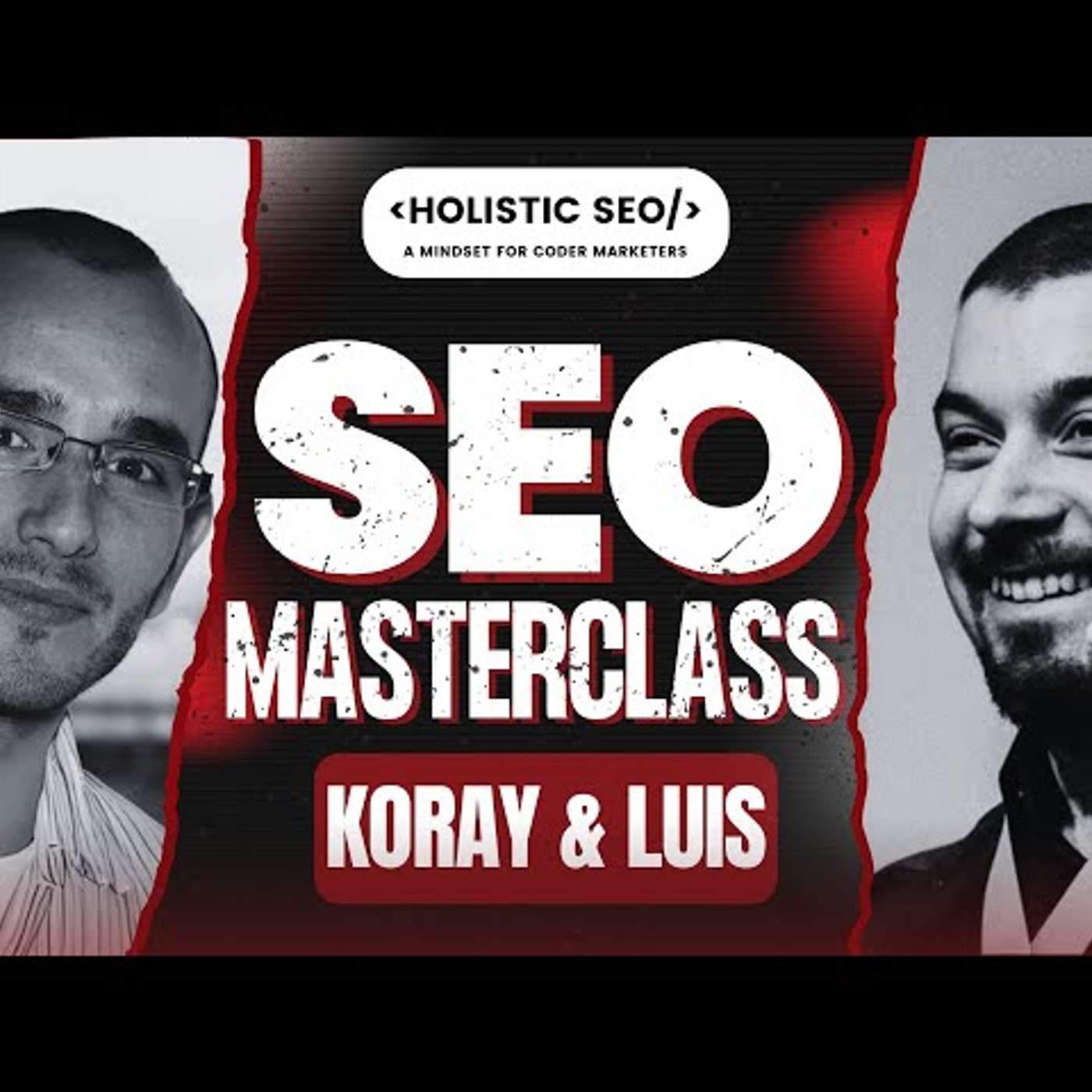
This episode of the Semantic SEO Podcast brings together Koray Tuğberk GÜBÜR and Luis Salazar Jurado to demonstrate how semantic SEO works in real client projects rather than theoretical frameworks. Luis shares how he discovered Koray's methodology through a YouTube testimonial featuring a community member named Pablo, who advised stopping and reconnecting the dots between concepts before moving forward. This single piece of advice fundamentally changed how Luis approached learning the framework and applying it to client work across industries including insurance and real estate in Spain and beyond.
The conversation covers how Luis trained in-house copywriters at a Madrid insurance company over five years, framing semantic SEO changes as opportunities rather than directives to gain buy-in and long-term execution. Koray and Luis also explore the concept of negative ranking states, where organic traffic declines slowly over a long period because brands neglect SEO while branded search demand temporarily masks deeper problems. A case study of a Berlin-based company that went three years without SEO investment illustrates how this pattern plays out in practice.
The episode also dives into the technical and conceptual depth of the framework, covering topics such as cost of retrieval, JSON-LD, schema graphs, micro semantics, distributional semantics, and how these elements help search systems process and rank content more efficiently. Luis and Koray connect these practices to the future of AI overviews and large language models, arguing that because LLMs ultimately process text and semantics, practitioners already working within a semantic SEO framework are better positioned for the next generation of search visibility.
“if you like to play endless game which is SEO if you like to do research learn new things work in a niche where you're not you're not going to get Bor in any way shap man form because everything is constantly changing SEO is definitely your spot”
— Koray Tuğberk GÜBÜR
Who Are the Guests on “Koray Tuğberk GÜBÜR Shares Luis Salazar Jurado Semantic SEO Success Stories”?
Koray Tuğberk GÜBÜR is the creator of the Holistic SEO and semantic SEO framework that sits at the center of this podcast. He developed a methodology grounded in topical authority, semantic content networks, and entity-based optimization, and he has connected his framework to foundational patents in information retrieval, including work by figures such as Steven Baker, the inventor of featured snippets. Koray uses this episode to highlight a community member's results as evidence that the framework produces repeatable, measurable outcomes rather than one-off successes.
Luis Salazar Jurado is an SEO consultant based in Malaga, Spain, who began his career as a developer for eight years before transitioning into technical SEO and eventually semantic SEO. Over the past three and a half years, he has applied Koray's framework to real client accounts in the insurance and real estate sectors, generating documented case studies involving compounding growth in top-three keyword rankings, impressions, and clicks. Luis is recognized within the Holistic SEO community as one of its most prolific and generous contributors, regularly sharing results on LinkedIn and helping other community members understand and apply the methodology.
What Are the Key Takeaways From “Koray Tuğberk GÜBÜR Shares Luis Salazar Jurado Semantic SEO Success Stories”?
Here are the key points discussed in this episode:
- Discovering semantic SEO through a single testimonial that advised stopping and reconnecting concept dots before moving forward can fundamentally reshape how a practitioner learns and applies a complex framework.
- Training client-side copywriters to trust themselves and present ideas to management, rather than issuing direct SEO orders, creates long-term buy-in and consistent execution that compounds results over years.
- Negative ranking states occur when organic traffic declines slowly over a long period and often go unnoticed because branded search volume temporarily masks the underlying deterioration of a site's search performance.
- Brands that neglect SEO during periods of stable or growing branded search demand are exposed when competitors invest aggressively or when algorithmic changes shift rankings, requiring costly recovery efforts.
- Practitioners already working within a semantic SEO framework are better prepared for AI overviews and large language model search because LLMs ultimately process text, making semantic clarity a durable competitive advantage.
“I do believe that after more than 20 years which as the SEO industry focus on content and links now is the first let's say Game Changer event in the industry and I do believe that in the foreseeable future there there is no question that you're going to be influenced by Ai and llm and that's why in a huge percentage I'm focus on semantic SEO because we are semantic creatures”
— Luis Salazar Jurado
Is “Koray Tuğberk GÜBÜR Shares Luis Salazar Jurado Semantic SEO Success Stories” Worth Listening To?
This episode is worth listening to because it closes the gap between semantic SEO theory and actual client results. Luis Salazar Jurado walks through specific cases, including a five-year engagement with a Madrid insurance brand where he trained copywriters from within, and a Berlin company that lost three years of momentum by ignoring SEO while branded traffic masked declining organic performance. These are not hypothetical scenarios. They are documented outcomes that show how patience, structured communication, and semantic methodology produce compounding returns.
The episode is also valuable because it connects established SEO practice to the emerging landscape of AI and large language models. Koray's reference to Steven Baker, the person behind candidate and passage scoring who also worked on featured snippets and now contributes to AI overviews, gives context for why semantic SEO methods are not becoming obsolete but are instead becoming more central. For anyone trying to understand where search is heading and how to position their work accordingly, this conversation provides both the strategic reasoning and the on-the-ground proof points to act on.
Who Should Listen to “Koray Tuğberk GÜBÜR Shares Luis Salazar Jurado Semantic SEO Success Stories”?
This episode is ideal for:
- SEO consultants who want to see semantic SEO applied to real client accounts with measurable results across multiple industries
- In-house marketers and content teams at brands trying to understand why organic traffic may be declining even when branded search volume appears stable
- Developers transitioning into SEO who want a practical roadmap for combining technical knowledge with semantic and holistic SEO frameworks
- Agency professionals and freelancers looking for communication strategies to get client-side writers and managers to adopt new SEO methodologies without resistance
Where Can You Listen to Semantic SEO Podcast?
You can listen to Semantic SEO Podcast on all major podcast platforms:
- Apple Podcasts – Search for “Semantic SEO Podcast” in the Podcasts app
- Spotify – Available on Spotify for free
- Amazon Music / Audible – Listen through your Amazon account
- Overcast – For iOS users who prefer a dedicated podcast app
- Pocket Casts – Cross-platform podcast player
You can also subscribe using the RSS feed: https://feeds.transistor.fm/semantic-seo-podcast
What Are Listeners Saying About This Episode?
“The section on training copywriters without giving direct orders was something I immediately shared with my team. Luis's approach of framing changes as opportunities rather than instructions is practical advice I hadn't heard put so clearly anywhere else.”
“The explanation of negative ranking states finally gave me a term and a framework for something I've been seeing with a client for over a year. The Berlin company example matched almost exactly what I'm dealing with right now, which made it hit hard.”
“I appreciated that Koray let Luis lead with his own story here. Hearing how someone went from developer to technical SEO to full semantic SEO, and then watching them produce insurance and real estate results over five years, makes the methodology feel a lot more accessible than reading about it in articles.”
Koray Tuğberk GÜBÜR says: if you like to play endless game which is SEO if you like to do research learn new things work in a niche where you're not you're not going to get Bor in any way shap man form because everything is constantly changing SEO is definitely your spot for my point of view very fun because again it's a it's a puzzle that is constantly changing and you cannot finish it and they have to keep paying hello everyone welcome to the another great SE interview and this is actually the first of its type so in my YouTube channel usually I share lots of bluehead s studies or maybe sometimes holistic s studies or other stuff but I I just decided to start a kind of success playlist so Luis Salazar gado is I believe the most successful holis Community member because he is the one who shared the first case studies besides me and the first results first successes and repeatedly not just one time so when you it also happened to me when in my first case study I published four websites because I knew that they would say it's luck but when you publish four they can't say luck anymore so Louis also did it like multiple times by implementing our framework cor framework or Corin however you call it based on semantics and topical Authority and at the same time he trained and helped many people in our community as well without expecting anything in return so he's a very willing to help and after this interview you can just actually reach out to him and ask questions about overall se2 he will be I'm sure happy he's from malaka in Spain very expensive place before going there just be sure that you have enough money and with that said let's start Louis welcome Luis Salazar Jurado says: thank you very much for having me uh my name is Lis alar Kur so basically I'm an SE consultant who let's say discover or found out about semantic isio around 3 years and a half ago a random video in the right side bar and YouTube and there was a guy that claimed that he was going to launch a course in semantic SEO and uh I just uh went down that RIT hole and start reading about semantic SEO and watching videos and so on so forth after three years and a half here we are doing this podcast Koray Tuğberk GÜBÜR says: yeah the life is very interesting you know like a person from Spain a person from Turkey then life brings them together actually it's very interesting thing to me at the same time uh it's interesting it happened actually by luck too P also say the same thing he just saw it on YouTube or something and now we are also with him as well so it's an interesting thing and when you saw the course or announcement or the videos how did you decide try to actually go for it many people actually at the beginning they just they are skeptical a little bit how is how is it for you Luis Salazar Jurado says: well in fact it was the real kicker the real uh video that changed my point of view was uh the testimonial you have with Pabo H and it was a key sentence I'll never forget is when you don't understand the concept about the framework don't move forward just stop and go back and connect the dots between the terms you don't understand and is a testimonial you in a cafeteria um in istan um the thing is that it was a the first testimonial where PAB share how to connect the concepts and then how to move forward and meeting pav uh let's say a year later he shared with me all the notes and all the graphs and connection he has about the framewor itself and uh it was very useful that was the real let's say moment that let's say trigger my my mind in order to focus heavily on semantic SEO Koray Tuğberk GÜBÜR says: AB to know that I mean yeah the pavl uh is one of the people who make really deep researches he created even a figma I didn't share it yet with the community to be honest but like two years ago he created literally a kinds of I mean I even didn't know that I I have written so much stuff when I saw that figma I was like okay even my employees didn't do that so thanks for it and I'm glad that actually you mentioned him and he is also part of this relationship with us so it's it's also good too and another thing is uh you got really good results in these last three years and you regularly share them actually on the LinkedIn as well and when you actually Implement these things do you do you think that sometimes clients get skeptical or do they know do they know that actually they should be waiting for something or do they provide enough resources for you how do you handle the let's say writing resources design resources development resources how do you implement these methodology for your own business Luis Salazar Jurado says: well it took me a while to communicate effectively the value of semantic SEO and also it takes I mean it took like two to three years uh to get great result in a client my second oldest client is H is an insurance company in Madrid and after working with them five years and I have a case study about this company and I shared with them five years later the evolution about keywords in top three and it was amazing um they didn't know but indirectly I was training the copywriters in semantico so they got convinced when the they let's say saw the results they were implemented so basically what I did was train the two copywriters make them let's say trust themselves in the testing and in the proposals so nowadays when I work with them I only give them the general idea and they do the rest so they now they really trust in the system and when they see the result they can also go to their management and present new ideas and concept and why we're doing what we're doing good for them the person no the person is actually ramanan V Gua and he is the person also behind programmable search engine uh technology and he yes so what I do is usually I report I create a video a short video sharing with them the benefits of implementing semantic SE optimizations and how they can do it but I don't give them direct orders what I do is hey guys here's where we are here's where we can be here's the chance we're ranking for and here is an opportunity and then I say today I trust your ability in copyrighting ex strictly from an SEO point of view I would do this but I'm pretty sure that you can find the right balance between where we are now and where when you want to be let's say uh just changing I've got results just changing where word so Insurance there is a a difference between provisional insurance which is insurance days or insurance for months so grammatically it might sound the same but it's not the same but it's not the same insurance for three months or for six months or for more than nine months the conditions on the terms are different yeah and people search differently for instance this brand is heavily focused on cheap insurance but cheap in English could be could have negative connotations but you can you can use different terms such as more economic affable more affordable but people search lowc cost insurance which means when we spot the opportunity that we were ranking for lowc cost insurance and we didn't even have the word low cost in our landing pages I communicate with them hey guys your segment of the market is cheap insurance but you can gr it in a different way so I get to them the options I share with them the potential optimization what we can gain from that optimization and they implement it themselves so there is a communication not a let's say you have to do this Koray Tuğberk GÜBÜR says: so basically you implemented a different communication strategy and also you gamed this process a little bit for them so basically even if they don't do it or even if they fail to do it it's not like fa like a failure it's like just they try something they learn it and they play with the page so you made it in a fun way I mean it's a yeah it's a better communication style than just saying do that it will work I I agree with you and because I know that many seos who try to implement semantic SEO they just have some different type of fights uh with journalists by saying that no you can't write it in that way and the journalist says that I am doing this 20 years what do you know about news and then the SEO tries to explain search engines and it becomes very negative on that point but your style here is very better actually and I believe it's a natural skill too I mean it's not just about being able to understand semantics or what we do it's also about being able to explain this and organize people motivate people and create a path for them so it's a great great method I also want to ask you uh how did you start actual digital marketing how old are you and why did you decide on SEO for instance because this interview I want it to be also about directly you not just about semantics or SE as well Luis Salazar Jurado says: well a little bit of background is I was a developer for eight years and then I found out about SEO and a guy I work with 10 years ago say hey Louis you you kind of uh ditch digger or you keep digging until you find the the key essence of the things why don't you try SEO um at that moment I started in technical SEO and I move and I jump from developer to technical ISO and after a year just doing technical is audits I get a little bit Bor and I realized everything was interconnected and then I started learning a little bit about marketing uh like building and so on so forth I I've been focused heavily on semantico the last three years and a half and I've combined the technical SEO knowledge with semantic SEO with the holistic SEO approach you share because every input from social media press release and so so forth help the the overall value of ofo basically yeah in fact my oldest clients I've been working within seven years uh this company was bought in some 2021 and guess what brand terms have decreased very smoothly since then because the management change and now they they have realized the the SEO is you know decreasing and there's AIG there's a big brand here in Spain that is investing like crazy in brand terms and you know they're not very happy but again data is data um now I have to convince them that they have to invest in brand and encourage people to search Brand Plus the service they're providing in order to you know enhance it so again everything is interconnected holistic view Koray Tuğberk GÜBÜR says: yeah and it's a fun game because it's a NeverEnding game you learn every day and yeah a very interesting game that is coming especially also with AI and all the the funny thing is actually we were talking about the brand search demand like since 2002 20 we were always saying that actually your brand should be searchable if there is no branded Search terms about you basically you are expandable according to search engine and people start to focus on that actually just after the helpful content update and sometimes it just makes me slightly sad I mean do you have to just lose your website to actually understand what holistic SEO is I mean it's like I just sometimes find similarities between the for the relationship between a doctor and a patient an SEO consultant and the website or the business owner because people usually listen to doctor when they are sick when they are sick they just go to doctor they do whatever doctor says when they are okay again they do the opposite of what doctor says and same also happens for businesses too I mean they just even if if they see El traffic increase they say that okay we don't need Su anymore or they just start care about suo when they lose but not while they are winning and I guess it's the the kind of mindset disease in my opinion what do you think Luis Salazar Jurado says: well it a very interesting point and in fact just in here in February I start working with a company in Berlin that the guy who is now in charge of product mean the product manager did SEO three years ago so over the last three years they haven't worked SEO but they let's say they keep improving the BR so BR terms heavy traffic but the overall traffic decreases they're in a negative ranking in state because the brand was I mean continue some people are very new here what do you mean with the negative ranking state would you like to explain it to them negative ranking State means that the organic traffic in your side is decreasing very smoothly and over a long period of time and that's a let's say the definition of negative ranking state so in order to reverse it reverse it you have to do something different that you have done until now so this brand again no no problem about people searching their brands or the brand combined with a product or service but the overall site hasn't been improved or uh it didn't do any is optimization the last three years and of course they're losing traffic so going back to what you mentioned the patient doctor relationship is okay it took three years to let's say realize that we're losing traffic and now they have to invest again in order to get that traffic back Koray Tuğberk GÜBÜR says: and may I ask you what was your hardest situation in AIO while implementing framework like let's say waiting for core updates maybe or maybe you had a really different competitor for the people who watch by the way this completely improvising no questions actually have been asked earlier so everything is naturally being asked and any let's say obstacle but serious obstacle what do you remember as an example Luis Salazar Jurado says: well uh it was in the I created my own case study you know to explain to myself the the most difficult part because when I started reading reading reading reading I got like uh confused because you don't know where to begin most the problem most human have I decided to stop focusing on one let's say vertical about the framework so what I did was I focus on ranking and I reread like several times the article you have about ranking specifically about ranking and when I understood that combine that with the what I previously mentioned the concept sh like don't move forward until you understand all the concept and you connect all the concepts and when I explained to myself that and I understood that connection concept then I moved forward but until because you have to define a a beginning or somewhere where you're going to begin to learn the framework because if not is impossible there is so much information so many case studies so many uh videos and resources interviews that you have to start somewhere that was the most difficult point and then the you start the SN rolling and eventually after 3 years plus now I feel let's say a little bit confident about the the framework because now I'm seeing the results and I it's say you feel like I don't get the whole framework because it's only you can have the whole framework but let's say a consider considerable percentage of the framework I understand Koray Tuğberk GÜBÜR says: I mean one time I I believe dale dale hit from our also core Community actually s like this is like actually going in your brain and trying to see how your neurons are connected that's why only you can actually see it in that way and unfortunately maybe it is in a way true but I believe uh you are creating really great results for a really long time l i mean you shared maybe like over I don't know 20 results until now I believe you are let's say you already presented more success than 99% of the S influencers the people who are on the stage or people who are taking attention on Twitter I never see any result from them to be honest and that's the reason that I usually don't like SEO influencers because they talk about SEO but they don't do SEO so if you don't rank websites what's the point of talking about ranking the websites all the time so I believe uh you are one of the best examples or one of the best consultants in this area right now and when it comes to do let's say when you go through these like say SEO conferences or different areas do you see other people who also work on our method ology or do you help them as well or do you usually see skepticism or criticism I'm asking this objectively because I usually go on the stage do the talk but I don't see what the come let's say people talk actually what do you think Luis Salazar Jurado says: well in fact last year in chai we hang out some members of the SE Community H she red created an event and we went there to share concept we share case studies we share results and not everybody get the con concept um at the beginning there's a kind of let's say they're not going to adopt a new system after let's say Decades of SEO let's say media brainwashing your brain or braing brain you but again step by step people H get the concept start talking about it share case studies and I do believe that in the coming years more and more people are going to be talking about semantic is Koray Tuğberk GÜBÜR says: I believe so too I mean when you look at all these large language models AI overviews or other search engines like perplexity or Microsoft being co-pilot and all of them they are all right now I mean coming to do what we are doing for a really long time do you know like Steven the baker the person who actually patented the candidate an passage scoring he patented it he invented it he is the person who created actually featur Snippets right now he is working on actually AI overview and I can tell when I created the framework uh he's patent were at the center of most of the stuff that's the reason actually people who Implement our methods and your methods right now too they will be already read for AI overviews or llm search basically as well and what do you think about the future of future of the SEO by the way like do you think they actually due to this AI for doing SEO or for getting visibility how do you think that actually our community and also overall SEO industry will be affected Luis Salazar Jurado says: well I do believe that after more than 20 years which as the SEO industry focus on content and links now is the first let's say Game Changer event in the industry and I do believe that in the foreseeable future there there is no question that you're going to be influenced by Ai and llm and that's why in a huge percentage I'm focus on semantic SEO because we are semantic creatures and all all the information on the internet you can transcribe it to text which is cheapest which is the cheapest way to digest that data image to text video to text audio to text and then process that data so if at the end of the day an llm is going to present the text the semantics why now focus on semantics which is Koray Tuğberk GÜBÜR says: yeah you also said we a great thing actually we are semantic creatures I mean it's like doing SEO in a semantic way for semantic creatures on a semantic search engine it makes I mean definitely it makes sense and do you think that actually being a DE V ER helps for understanding overall search engines or information retrieval because I know that you also have read all of these academic books that we also mentioned or suggested earlier Luis Salazar Jurado says: I think that in terms of understanding abstract Concepts yes is a big benefit but let's say like you mentioned also in previous interview a sociologist or a psychologist or someone that understand human nature in his Essence it also going to have a an advantage so what I again the transition I did was developer SEO and then semantics which means I've seen the whole ecosystem that's why I'm pivoting or I'm adjusting to what I do believe is is coming which is more llms Ai and semantics because uh in my opinion everybody can buy links and everybody can create content but besides that two component or two variables of the game what else are you going to do for instance I'm very heavy on Json LD and structur data because for years I listen to ban Buu's hangout um in that hangout there there is a Canad a Canadian guy that said more or less this which is if everything is going to be in the future machine learning understandable or machine learning digestion of data gldd is link data so you provide to an algorithm the information in the cheapest way to digust it which is Json LT even cheapest that that HTML because you don't have to parse yeah the whole anything yeah you don't have to R you don't have to render and you don't have to parse HTML about come to your page get the Json LD a leavea almost no memory budget consume that's why I was very focused on structed data and on top of that uh let's say this is one extra point or one extra p and the second thing is uh also most SEO I've seen do not use gal properly which means they just copy and paste the jonl D from the template but they don't interlead the the Json properly so at the end of the day it's like Json individually in that page but they're not interconnected which means from my point of view they you they don't get the whole value of the Jon LD because they they don't connect or they don't integrate or they don't create a hierarchy between them Koray Tuğberk GÜBÜR says: which means that actually if the search enging gets even these J LDS from different pages still there is an extra work there for connecting and creating hierarchy checking their consistency with each other and they might not be able to create it we also see that from their Knowledge Graph I mean for the same person you can find like six different entity registrations even if they are the same person the search engine just pursues them like they are different despite their not so that creation of the information graph actually is a costly process I can tell one once actually I was talking to the fabis Chanel from friends from Microsoft pink he was also saying that actually due to these conflicts in the knowledge graph and the cost because of the cost of it they were preferring the answers from just web pages even if they are not in the knowledge graph because he was saying it was costly and that's the reason also uh the name of the featured cets in Google because they have different names than ours and they call it web anwers most of the features snip pass actually are not registered into the knowledge graph and most of them are not checked in terms of whether it is aligning with their knowledge base or not these things are really really costly speaking of the cost you also believe and think that essence of our framework corise framework or topical Authority is coming from actually cost technically would you like to explain that part many people actually miss that the most important thing in the framework Luis Salazar Jurado says: yeah so again maybe because I come up from my technical background cost is everything at all levels in all fronts which means in semantics in JavaScript CSS HTML image sites everything so CA of retrieval exclusively in semantics is how complex it is to understand that text for an algorithm not necessarily the amount of word on their own I mean you can let's say more Tex is not going to give you more value if the content is not properly structured and understandable for a machine but on top of that again going back to the jonl Jon LD is the fastest uh let's say let the cheapest fastest way to machine to understand what your site is about so in terms of cost of retrieval you can optimize your site at all levels Json LD HTML image sites CSS sites JavaScript request HTTP request uh Ser response time I mean you can dissect the Cal retrieval concept and dissect it to the bones and you can let's say improve like 20 50 100 variables is a a big Universal optimization just in that concept C to not focusing on other concept about the framework so when you there is a quote somewhere in one of your case studies which is every pixel every letter and every bite come something like that and when I I mean this could sum up everything so that's the sense Koray Tuğberk GÜBÜR says: technically I always think that actually I also called this in Chang my stage to uh technically what we do is we take your website into data and data what the algorithm actually process and technically what you do with the Json LD is the same you just take your basically web page and turn it into the Json LD as a data format to give it to the algorithm so they can actually process that and speaking of actually that pixel part because we understand letter part it is for the text and uh let's say the bite section is a for technical uh cost along with also text cost too also affects the relevance of the semantic units that you are creating on the page how do you optimize your layout for instance for higher relevance or responsiveness Luis Salazar Jurado says: well I when I have the opportunity to influence the designs I structure in let's say in a descended order where you're going to put the more important entity attribute value in the whole page like main content supplementary content which means sorry again some people don't know what do you mean with main content or supplementary content let's define them first then we can continue okay let's say you have a web page the main content is going to be the initial part of your page or where the key information is going to be located supplementary content usually is closer to the footer which is where the least important information is going to be located or let's say is in the section where you're going to connect concept with other the pages Etc so once you have on you have defined your let's say the structure of the page you can start with the center piece annotation which is if I remember correctly the first 400 characters of uh the page or it could be measured also in pixels pixel or characters and then they're going to assess the quality of the page itself just in those uh initial 400 characters and from there they're going to move on if you let's say pass the mark of quality and then they can uh spend more time in your landing page in order to let's say more trust about the content you have created so coming back to the layout is very important in terms of first how you're going to structure the the page itself where are you going to put the information in each section let's say either main content or supplementary content and then uh it's a mix between CSS HTML D um let's say the ability of the developer combined with the designer to make it as light as possible which means the least uh number of lines of code the design have to be uh easy to understand from the user which means great user experience and then uh avoid Mega menu as much as possible because about is going to spend so much time there and if you do not structure the page properly you're going to confuse the search engine itself so layout optimization in my side is very important and what I do is to minimize as much as possible the structure of the page in order to make it easier for the search Eng to understand what the specific thing we're going to accomplish in this page Koray Tuğberk GÜBÜR says: Havey to know that and if the layout affects the relevance and if you already optimize the layout for providing higher relevance and responsiveness you also determine uh the type of the let's say component because when it comes to the layout I'll say actually three things let's say component size component order and component placement do you do you compare like how many component you have and the competitor have or let say whether do you put calculator first and calculate L calculator later or let's say it is a booking website for instance do you try to put more drop downs more checkboxes or more I don't know uh sticky navigation for uh booking for different countries or localities how do you try to create these let's say difference between yourself and your competitor in terms of layout and functionality may I ask well let me share if I can one more every question here is just improvising so I'm just asking it right now it's not like the interviews that you see in other channels okay so I'm going to share with you going back to the question you ask do you see the screen yeah this a by the way okay so this is going back to your question we started ranking this page when we let's say test and redesign the above the fall section of the page so magic number 10,000 Impressions which is around here when you overcome that threshold uh 10,000 impression why do we watch for it for instance people might also understand that well in in from what I've seen when I when I saw your case study when you recommend get to 10,000 impression as fast as possible for my opinion is 10,000 impression is like critical mass when the search is going to trust you enough in order to give you more traffic so when you get that let's say thresold you can see over the last 6 months that we didn't drop we didn't lose traffic because it's a kind of confidence that the search Eng is going to put on you so in this landing page uh we started testing around this section where we all have like 30 clicks a day and now youve seen the jump from between 600 and 800 clicks a day and just testing both in the layout optimization thematics uh H page optimization and so on so forth and what we did is uh I connect the dots after research which is this is a a thing um it took me a while to thejust which is Google has been telling us for decades focus on the user and we thought they were lying to us but it wasn't until I understood what the user really really really wanted that I could redesign the page and provide the information they were looking for in fact we're getting traffic in this landing page for terms we don't even have in the copy which is kind of contradictory to the knowledge we've got in is over the last decade which is you have to put the keyword in the page and you have to create links and so on so forth so can I do a real light test okay so um in this landing page you see here it's in Spanish is the tractor yes how old how old is my current license uh number Tractor okay but if we go to the page the word tractor is not even there so let me go to the code and look tractor you see the word tractor it's not there but going back to the queries how old is the my tractor cataly number and we have over a thousand clicks why is that because Google associate that in this interface what you want is an interface to understand how is your vehicle not necessarily your car it could be your car your motorbike your tractor relations basically your P so all the historical data which means all the signals that this Ling page has been created for let's say two years make let's say or now the algorithms have enough information to understand that it doesn't matter the kind of vehicle you have as long as you type here a car license number plate they're going to give you the feedback because H there is a connection with the API with the government so they can answer you like let's say I introduce this uh car license L plate and they give me how old is the car but you can you can provide here any car license name you want about any vehicle so this is this is a very fun game because now you don't have don't necessarily mean have the keyword in the page in order to run for it this is also something that we call actually a bit micro semantics content configuration or relevance configuration so it's also a great example too I mean traditional SE just tries to stop every keyword with every type of anchor text and they're spending time for nothing there to even other day I was checking actually uh a patent from Amit single it's called Uh improving queries by semantic information it was trying to explain it actually based on the conceptual connections between the queries they can actually expand the query context and they do it usually by creating a kinds of query uh query concept Vector so in this case if a tractor in the queries and the vehicle in the queries if there is a enough level of let's say let's say enough level of closeness between them in the queries they will be clustered together and they will create actually the same query Network for the same query Network we open basically a single page so uh basically this is about lexical semantics too which is a very good example if you want also you can show your other uh maybe some case studies too I believe people would like to see this uh inter active engagement even more would you like to if not protected by NDA no problem Luis Salazar Jurado says: so this content is the one I wrote like years ago about how I started uh how I began implementing cor framework like I mentioned previously I focus on just one vertical which is ranking and R ranking and here I share Concepts uh at the end of the content we're going to see see the the structure of the page so basically we took a let's say a father content and we realize people searching for female and male about the original content so we created two landing pages one for male one for female the male didn't work which is this page you are seeing now and this is the female it is about pets um again it's say techic ities about uh PS and so so forth but let's go to the layout which I shared here which is this is the overall structure of the overall analysis of the page which is I'm going to check what the competitors are doing and I'm going to do something different which is in terms of images competitors have several or dozens of images we just have one image in video competitors have a video I'm going to create a video in terms of head headings most of them have a lot of headings I'm going to just create two table none of them have tables I'm going to create tables it check of data competitors have no Json LD and create Json LD and most contents have thousands of words we only have 200 and here is the layout which is heading H1 image paragraph video basically what I tested was I'm going to create a Content that have all the checkbox has video has image has at bullet points have paragraphs and so we're going to cover in One landing page all the checks and this is the evolution Koray Tuğberk GÜBÜR says: it's great actually yeah and here the evolution of the sides and how we got feature Snippets um really good and in terms of the layout you also proved it actually one in one of my case studies I was putting a title tag and a title tag that was uh more text doesn't mean better context basically you have actually ranked better with shorter amount of words you didn't write long you just added more structured content there one more thing is in the patterns maybe as you remember uh there were two different scores one is Frost type of content score the other one is a structured content score when you use a table and also a paragraph structure Bic you you are actually evaluated for both of them which is increasing your overall score one more time so it is also one of the advantages in that area and this is I guess the interview that you mentioned earlier with P basically it's really it's really good in this case I believe there are there is a really huge value there for like the layout can you also show some more sections because it might be helpful maybe for relevance configuration Luis Salazar Jurado says: do you mean I go back to the yeah Higher Ground because there were some uh relevance configuration sections as much as I can see in that area this is I understand also use supplementary content with a sign there could you go even above yes here is but the H1 image so image for example I'm just asking but the reason for that is again the cost or quality no it's like the overall theory about this content is I'm going to check all the boxes terms of video image paragraph uh listings uh table but I'm now going to let's say overfeed the data again going back to the analysis most sites use several of those dozens of images I'm going to just use one from uh Google's point of view when you use actually one representative main image it is also better for them because they also want to index just one they don't want to index every image in that area and if you have a bigger resolution with just one image also if you're able to create the context on that with text or with objects also uh better as well do you use any logo or text on the image well I optimize the image with attribute caption and also in the Json LD okay do you when you implemented Json LD do you just follow the Google's own structured data uh format or do you also go for schema.org and you find new stuff that Google doesn't mention yes is like I previously mentioned is I I do not only go to the schema standard and get template I interconnect the Json so I create a kind of mini graph graph yeah in each landing page okay and the the main thing there is then you also say that actually even if the Google's own documentation doesn't mention some schema properties basically they are also using them for understanding the content and they give basically just the basics in their documentation and uh this might be a bit an interesting question but do you know actually who created this structured data Adventure in Google for them the person Koray Tuğberk GÜBÜR says: no the person is actually ramatan V Gua and he is the person also behind programmable search engine H technology and he is also very close with again Steven de Baker or sasan van kataki Amit single as well he is one of the fundamental people in Google and he actually had has really good speeches on YouTube I suggest everyone to watch them because he's an academician and he created sca.org while he was in Google and he was working in Google and also sca.org as a separate project so whatever he does actually in sca.org it is also always connected with a fire hose basically to Google too uh I just wanted to give this extra info because I was doing an extensive research about him too basically all these case studies all this community came from sto working actually Engineers I can tell and about your second uh article there I will examples here too there I will examples here too in order to connect first I create a memory here the January 2022 my first email to you let me just actually look at it let me three three years ago the Bill's name is also there too I remember I I remember these these years it was easier and you use also the term the qu qu score threshold and re ranking with the augmentation of queries a query augmentation yeah nice m so in order not to or in order to finish the schema part uh basically I structured this content talking about a schema then let's jump to schema I I believe heartly about the schema because this is an e-commerce in real estate where we implemented the schema product for Real Estate two years ago and it took us more than a year to for Google to trust us and you can see the evolution suddenly yeah it took us more than a year which means I do believe that Google is testing you constantly and when you have the trust they give you an insane amount of traffic yeah like that's true I mean they get you a candidate source and then they just give you some some small tests and with a core update probably there is a core update there too I assume or a major update or something like that and they just change sources with each other it's a really good result as well and the impression changes are also seem seems very uh impressive and also you use the concepts like micro semantics could you like to explain how did implement it with also statistical semantics too Luis Salazar Jurado says: basically uh this in this article I get the holist your approach and I share case studies in micro semantics a statistical linguistic and distributional semantics semantic Network and schema so uh this is the brand I mentioned at the beginning after five years working we increase from less than 250 kers in top three to over 800 in insurance and the video about the holistic SE approach highly recommended micro semantics is the case we have seen uh previously in the video where uh I I've shared already the landing page and the approach and everything else in statistical linguistic and distributional semantics uh What uh going back to the terms Barat means cheap in Spanish how we improve systematically and steadily the overall site and how over the last 16 months we have increased like 5x traffic just in with distributional uh with statistical linguistic and distributional semantics just focusing on fine tuning the landing pages around chip and around online this is an insurance how we grow from how grw from four clicks a day to over 20 clicks a day and again it's like uh the client have to trust you the copy writer have to trust you they have to implement the things steadily and as you can see it took us a while but now when they see this they value the work they understand that it takes time and of course it's not like a fast and easy thing and in order to combine all those concept together the semantic content Network this is the evolution of one project I've wor over the last two years Koray Tuğberk GÜBÜR says: wow we we started from nothing and we hopefully after two years of work they give us the traffic in the November CT update great result brother really great I mean it's like three times more H double from 50k to 30k more or less really good so again Impressions is the leading indicator after the impression come the Cs as long as the impression keep increasing and then come there is a direct correlation here like let like if you overlap both the impression of the C is so much more less it's really really great result I mean it's very impressive I I would like to say that I mean it's not easy to show that patience and I believe consistent work too I believe it's also about your character too you are a very calm person and very calm and very patient I believe your personality also matches with this two I believe you make really good money in stock market too that's just an opinion or suggestion maybe you to do it I'm just saying but your personality looks perfect for this area and this methodology these are great results and if you would like to actually suggest something for uh let's say the new seos who try to learn actually semantics and overall our topical Authority methodology what would you like to suggest them like let's say three suggestions Luis Salazar Jurado says: first suggestion be patient have you have you have seen in the video my first EMA to cor I VI was three years ago and I started working like six month us to that second of all is be open to New Concepts and ideas which means anybody can do uh content on links and third is going back to the my real I mean I'm going to thank pav for more is follow pav climov advice when you start start whatever you want or the place you feel more comfortable but do not move forward until you understand all the concept connect the connect the dots which means understand it tested it or at least uh try to I don't know make an implementation in the client even though you're not 100% sure I mean not in the hom page but the in a let's say not that important page and then you can see real life how things works I mean I guess my clients do not listen to this but I've tested life with my clients this kind of Concepts micros semantics everything of course I'm not a risk if you have seen I'm not a risk person but I tested it and how are you going to know if it going to work or not if you have your own project or your own sites it test fantastic but by approach is I'm going to test it I'm not going to risk their client in any way to man form and if it works we can let's see spread or we can replicate that would be my third one to sum up patient second get open to new ideas and combine ideas and there test practice and and share also because best best ideas I've got has been for other guys in the community Koray Tuğberk GÜBÜR says: I believe you also are launching actually a newsletter am I right for semantics Luis Salazar Jurado says: yes I'm going to launch a daily semantic is your newsletter daily daily yeah so in order to let's say help people get get the ideas out of my head in the simplest way possible not to over complicate things I'm going to do it minimalistically and concept by concept like cost of retrieval all the kind of stuff Source context and so on so forth Koray Tuğberk GÜBÜR says: it's great to hear that and if I want to subscribe to these newsletter how can I do that Luis Salazar Jurado says: well we're going to provide the link below in the description Koray Tuğberk GÜBÜR says: um okay I would very happy if people see this you are enjoying some of the cohort meetings to help people am I right for inside the community do I remember correct Luis Salazar Jurado says: yeah I inan several cohorts um we have very active uh Whata group um also people on in the community in the Facebook uh they are asking um sharing case studies uh successes and so so forth Koray Tuğberk GÜBÜR says: yeah it's it's great I mean the cohorts are basically just uh Circle learning environment if you don't want to study by alone you just join a cohort you meet weekly you ask questions answer questions and do progress Al together and Lis is helping many people uh there as well and L if anyone wants to actually be your let's say client or your mentee your student or just ask questions to you or buy you a beer or coffee without coming to malaka if possible how they can do that Luis Salazar Jurado says: well they can find me um LinkedIn they can find they can search Sal and find my profile and reach me out and also they can find on my website which is s technical.com Koray Tuğberk GÜBÜR says: we will write them also to the video as well yes and from there you can connect have to know that I believe actually we will be doing these type of interviews more also with you too because as I say this will be like a success series and Al it's also meaningful for me to have you the for the first one because you are the most successful among many of them so starting with the most successful person for the success series it actually makes sense and before the ending would you like to say anything for our let's say audience in the last words Luis Salazar Jurado says: well if you like to play endless game which is SEO itself if you like to do research learn new things let say work or work in a niche where you're not you're not going to get bored in any way shap man form because everything is constantly changing SEO is definitely your spot is for my point of view very fun because again it's a it's a puzzle that is constantly changing and you cannot finish it and you have to keep playing Koray Tuğberk GÜBÜR says: that's true I mean even I keep learning keep reading after all these years and hours too okay people so these is our new format and we are coming to the end of uh the first episode of the our holistic SEO Community success series I am glad that Louis Salazar actually came to the first one and if you want to if you want to find him he is in our community if you want to be a client you can apply to him if you are lucky I'm sure that he will be accepting you and with that said see you in the next time thanks so much see you thank you
Creators & Guests
 Guest
Guest
Koray Tuğberk GÜBÜR is a renowned Turkish SEO expert, entrepreneur, and the founder/CEO of Holistic SEO & Digital. Koray Tuğberk GÜBÜR teamed up with James Dooley to create the Semantic…
 Guest
Guest
Luis Salazar Jurado is an independent SEO consultant and specialist in eCommerce and Saas.He has a background as a web-developer, which he later combined with digital marketing and analytics to…